For IT leaders and small CISO teams — feeling overwhelmed by the idea of an incident response plan, worried a data breach or cyber attack could cost you customer trust and fines — this guide gives a clear, practical roadmap you can actually use. Our team helps organizations design repeatable incident response procedures that reduce downtime, speed recovery, and keep you out of headlines (we've done it for companies with 1200 to 10,000 users). Read on for concrete steps, timelines, and what your playbooks should include.
What is an incident response plan?
An incident response plan is a documented set of roles, procedures, and communications designed to detect, contain, eradicate, and recover from cybersecurity incidents like ransomware, data breach, or other malicious activity. Learn more about detect, contain, eradicate, and recover. Think of it as your emergency manual - but with playbooks for the three things that matter: stopping the attack, preserving evidence, and restoring operations fast. It's not theoretical. It's the checklist the first responders follow when every minute counts.
Why you need a plan before a cyber attack
Because when an incident hits you're not going to invent processes in the middle of chaos. I've noticed companies that delay planning often miss legal deadlines, leak customer data, and spend 4x more on recovery (true story). A plan reduces Mean Time To Detect (MTTD) and Mean Time To Recover (MTTR), limits financial exposure, and protects reputation. Simple, measurable wins like "isolate affected endpoints within 30 minutes" make a huge difference.
How do you build an incident response plan?
Build it in six repeatable phases. Short bullets in your head, long on the page. Follow them - and document everything.

1. Preparation: Create a response team with named roles - incident commander, forensics lead, communications lead, legal counsel, and business owner. Define escalation thresholds (for example, any confirmed exfiltration triggers executive notification within 60 minutes). Inventory critical assets, map data flows, and ensure backups are tested daily or weekly depending on risk.
2. Identification: Define clear detection criteria - unusual outbound traffic spikes, multiple failed logins, or alerts from EDR/SIEM. Set detection time targets (say, discover within 24 hours for high-risk systems). Log retention should be at least 90 days for forensic work (I've seen 30 days kill investigations).
3. Containment: Short-term containment isolates systems to stop spread, long-term containment rebuilds segmented environments. A rule of thumb: contain first, then investigate. Preserve volatile evidence for the first 48 hours if possible (RAM images, active sessions).
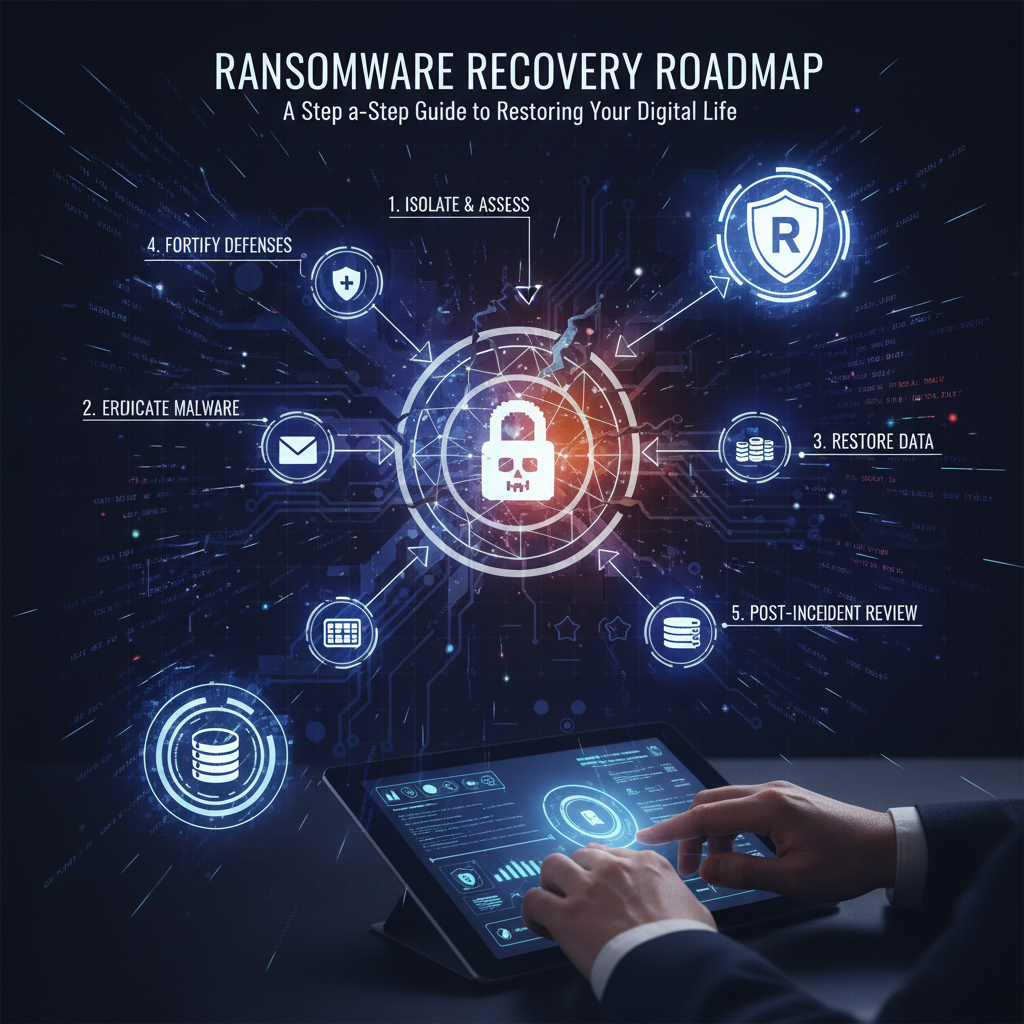
4. Eradication: Remove root cause - patch exploited vulnerabilities, remove malicious accounts, and clean images. Record exactly what was changed - you'll need that for audits and insurance claims.
5. Recovery: Restore systems from known-good backups, validate integrity, and bring services back in phased stages (test, pilot, then full). Recovery should include data validation checks - for example, checksum comparisons or sample transaction reconciliations.
6. Lessons Learned: Conduct a 7-day review and a 30-day post-mortem. Update procedures, patch timelines, and runbook steps. Track improvements with specific metrics - reduce MTTR by X hours next quarter. This is where real improvement happens.
What procedures should be in your incident response playbooks?
Procedures should be crystal-clear, short, and action-oriented so responders don't hesitate. Each runbook should answer: who does what, when, and how. Include steps for: initial triage, forensic data collection, system isolation, credential resets, legal notifications, regulator and customer communication, and cyber insurance claims. For example, an initial triage procedure might read: "Incident commander notifies CISO within 15 minutes, collect EDR logs for infected hosts, preserve snapshots, and cut network segment A off from internet access."
Who should be on the incident response team?
Don't overcomplicate. At minimum: one incident commander (decision maker), one technical lead (forensics/EDR), one communications lead (external and internal messaging), one legal/ compliance representative, and a business unit owner who understands operational impact. Outsource specialists for deep forensics or threat hunting if you don't have in-house experts (this is normal and smart).
How do you recover after a data breach or cyber attack?
Recovery is more than flipping switches. Start with containment and evidence preservation. Then rebuild from trusted backups, validate data integrity (don't assume backups are clean), and restore services in a controlled order - core systems first, then peripheral services. Notify customers and regulators per applicable laws (get legal involved immediately). Finally, remediate root causes and tighten controls - patch timelines, multi-factor authentication, least privilege, network segmentation.

How do you test and measure incident response readiness?
Tabletop exercises are the cheapest, and live drills are the most revealing. Run a tabletop every quarter and a full technical exercise twice a year. Use metrics: MTTD, MTTR, time to isolation, and percentage of playbook steps completed. Set targets - for example, detect and isolate ransomware in under 60 minutes during an exercise. Measure, iterate, repeat.
Common tools and practices
Critical capabilities include endpoint detection and response (EDR), security information and event management (SIEM), centralized logging, backup immutability, and network segmentation. Also keep a contact matrix (external counsel, forensic vendor, insurance broker). And document communication templates for customers, regulators, and press so you can move quickly without agonizing over wording.
When should you call outside help?
If the incident involves confirmed data exfiltration, unknown persistence mechanisms, or legal exposure, bring in outside forensics and counsel immediately. Don't wait - some attackers hide for months. Our experience shows that bringing experts in within 48 hours shortens overall recovery by weeks, and often saves money compared to prolonged internal toil.
Quick checklist to start today
Create one-page runbooks for your top three risks (ransomware, credential compromise, data exfiltration), name the incident commander, schedule a tabletop in the next 30 days, and verify backups for one critical system. That's it. Small moves, big payoff.
FAQ — How long does it take to build an incident response plan?
For a basic but usable plan, you can draft it in 2 weeks if you allocate focused time and stakeholders. A mature program with tooling, playbooks, and exercises usually takes 3 to 6 months. Start with the essentials and iterate.
FAQ — How do you balance recovery speed with evidence preservation?
Contain first, then collect evidence. In practice that means isolating systems to stop damage, taking forensic snapshots, then restoring from backups. If you need to bring systems back fast, preserve a forensically-sound copy first - it's cheaper than a failed investigation later.
FAQ — Do I need cyber insurance?
Most organizations benefit from cyber insurance, but policies vary widely. Notify your broker early in an incident and follow policy rules for vendor engagement and forensic reporting. Legal counsel helps here - one missed step can void coverage.
FAQ — What metrics should leaders track?
Track MTTD (time to detect), MTTR (time to recover), time to isolation, number of incidents per quarter, and percent of playbook steps completed during drills. Tie these to business impact so leadership sees value.
FAQ — If this feels overwhelming, can someone handle it for us?
Yes. If you lack staff or prefer to outsource, your incident response provider can run on-call response, perform forensic analysis, and help with communications and recovery. If you want, our team can help set up your plan, run tabletop exercises, and be your emergency backup when a cyber attack happens.